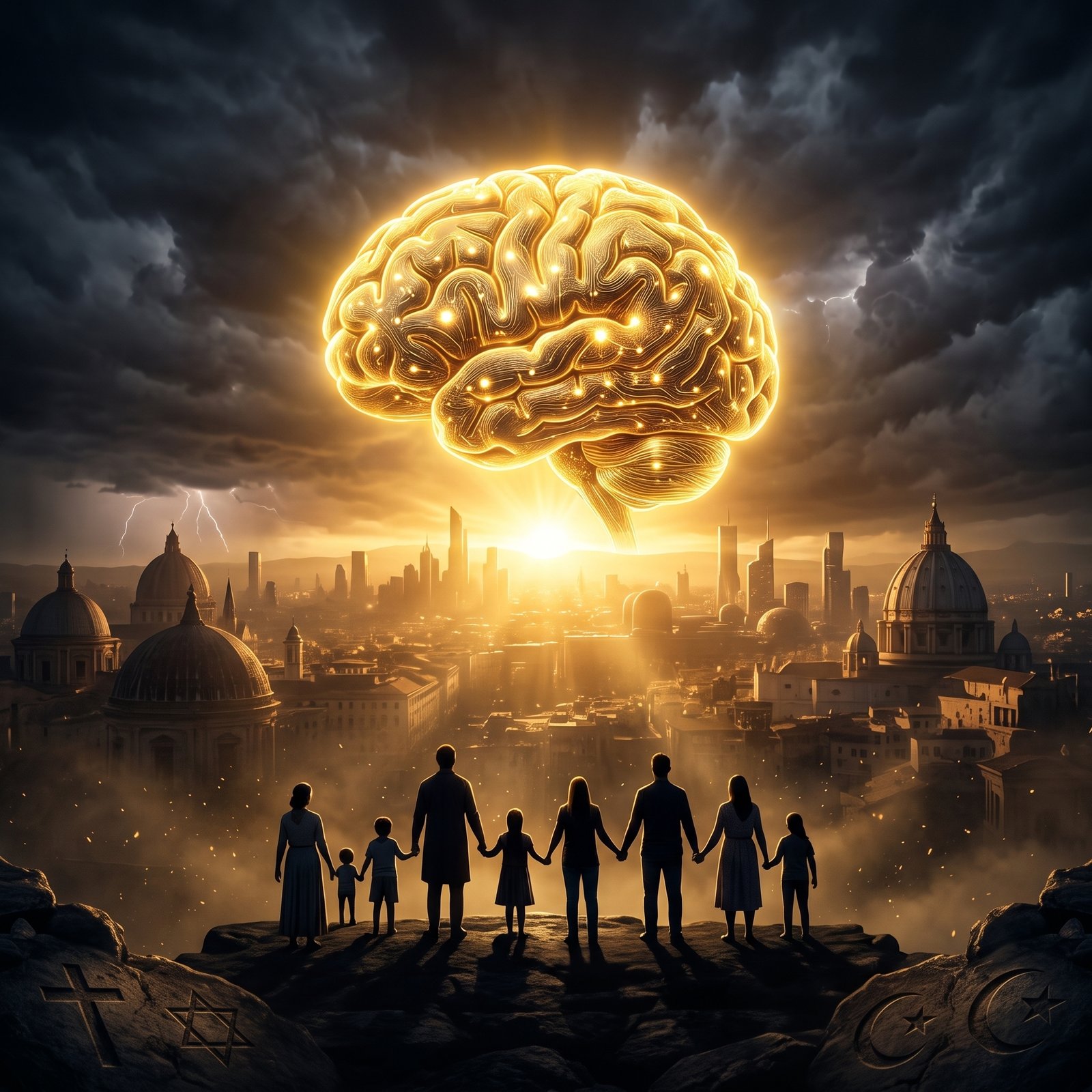
The Moment You Realize You’re Standing in a Doorway
The Moment You Realize You're Standing in a Doorway
There is a particular kind of quiet that arrives before a big realization. It rarely comes with fireworks. More often it shows up as a small, persistent question that refuses to leave you alone, one that sits in the back of your mind during a conversation, a sermon, a family dinner, or a sleepless night. You find yourself wondering not whether your beliefs are true, but where they actually came from, and whether you ever really chose them at all.
That question is the doorway.
Most of us never notice we are standing in it. Belief, for the majority of people, arrives long before reasoning does. A child absorbs a worldview the same way they absorb a language, through immersion rather than analysis. By the time a person is old enough to examine what they believe, the belief has already shaped how they see everything else, including the tools they might use to question it. This is not a flaw unique to any one tradition. It is simply how minds form inside families, communities, and cultures.
What makes the doorway moment so disorienting is that it asks you to do something almost unnatural: turn around and look at the framework you have been standing inside your entire life. Not to tear it down out of spite, and not to defend it out of habit, but to actually examine it the way you might examine anything else you care about, understanding clearly.
Some people reach this doorway and step back immediately. The discomfort is too sharp, the stakes too personal, the potential cost to relationships too high. That response deserves respect, not mockery. Walking away from a lifelong framework of meaning is not a small thing, and pretending otherwise does a disservice to how difficult the process really is.
Others step through. Not because they have found all the answers, but because the pull of the question becomes stronger than the comfort of not asking it. What waits on the other side is rarely a tidy conclusion. More often it is a longer, more honest relationship with uncertainty, one where curiosity replaces inherited certainty as the guiding force.
This is the space The Religious Matrix was written to explore. Not as an attack on any single faith, and not as a demand that readers arrive at any particular conclusion, but as an invitation to notice the doorway many of us have been standing in without realizing it. The book does not promise comfort. It promises clarity, and asks readers to decide for themselves what to do with it.
If you have ever paused mid-thought and wondered where a belief actually came from, you already know what this doorway feels like. The only real question left is whether you are ready to look through it.
What would you find if you turned around and examined the framework you were given, rather than simply living inside it?